MasalaMetrics
AppsAI-powered food analyzer app taken from concept to a shipped product with 10,000+ App Store downloads and seed funding from four investors.
Computer VisionGenerative AIiOSProduct
Causal AI · Robotics · Autonomous Systems
AI Researcher • Builder • Entrepreneur • Musician
Building AI that understands why.
I’m interested in the intersection of Causal AI, robotics, and autonomous systems — developing intelligent systems that move beyond detecting problems to understanding and correcting their underlying causes.
I’m a student working across artificial intelligence, causal reasoning, robotics, software development, and entrepreneurship. What connects those interests is a single question: not just what a system did, but why it did it.
My work spans both sides of that question — theoretical AI research into how cause-and-effect can be modeled computationally, and building real products that people actually use. I like moving between the two, because research without a product stays abstract, and a product without research stays shallow.
Longer term, I want to combine Causal AI with physical robotics and autonomous systems — machines that can reason about the origin of their own failures instead of just reacting to them.
App Downloads
Seed Investors
Published Research Paper
Patent Pending
AI Industry Experience
MSBOA First Division
Featured Project
AI-Powered Food Analysis
MasalaMetrics is an AI-powered food analyzer application I helped create and develop as a startup. It uses AI to interpret what someone is eating and turn that into useful nutritional insight — shipped to the App Store and used by thousands of people.
From idea → product → users → investors
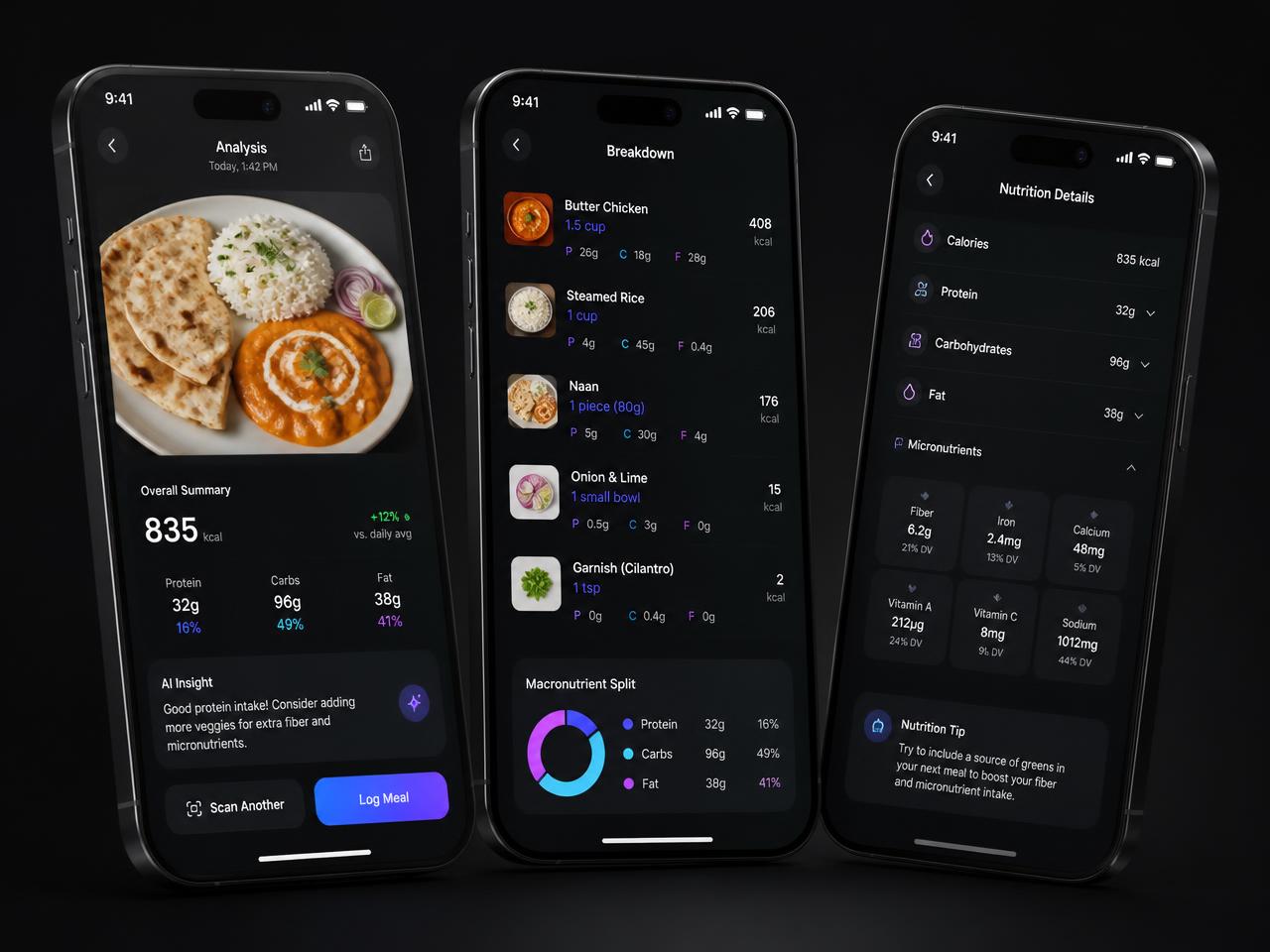
App screenshots · demo space
This research explores how computational causal inference techniques can be used to investigate potential relationships between risk factors and Type 1 Diabetes. Rather than relying only on statistical correlations, the work applies Python-based analytical methods to examine whether specific factors may actually contribute to the outcome.
Correlation
“X and Y occur together.”
Causality
“Does X actually contribute to Y occurring?”
Causal structure
Described here at a high level only. The invention concerns a decision-making engine for autonomous systems: software that assesses the state of a system, reasons about the problem it is facing, and chooses how to act as conditions change — rather than following a fixed, pre-scripted response.
Status: patent pending. No claim is made that a patent has been granted, and confidential details are not disclosed.
Three summers of internship experience at an AI company gave me exposure to how AI is actually built and shipped — beyond classroom and side projects. These are the areas the work spanned.
Developing and experimenting with AI/ML models and data-driven applications.
Exploring systems that allow machines to interpret visual information.
Building and experimenting with modern AI-powered applications.
Investigating models that reason about cause-and-effect relationships.
Exploring how intelligent systems can make decisions and respond to changing conditions.
Turning AI concepts into usable software applications.
Traditional automation often responds to the symptom of a problem rather than determining its root cause. A motor slows down, so a conventional control system commands: increase motor speed. But the slowdown may come from friction, bearing degradation, temperature, voltage instability, payload variation, lubrication, alignment, or component wear. Running the motor faster treats the symptom.
Causal chain
Causal reasoning traces the pathway back: the slowdown is the last node, not the first.
Traditional AI
Causal AI
Detect → Understand → Explain → Correct
The goal isn’t just autonomous robots.
It’s robots capable of causal reasoning.
I want to keep researching the combination of Causal AI, robotics, and autonomous systems — technology that lets robots and machines understand the root causes of abnormal behavior and make more intelligent corrective decisions.
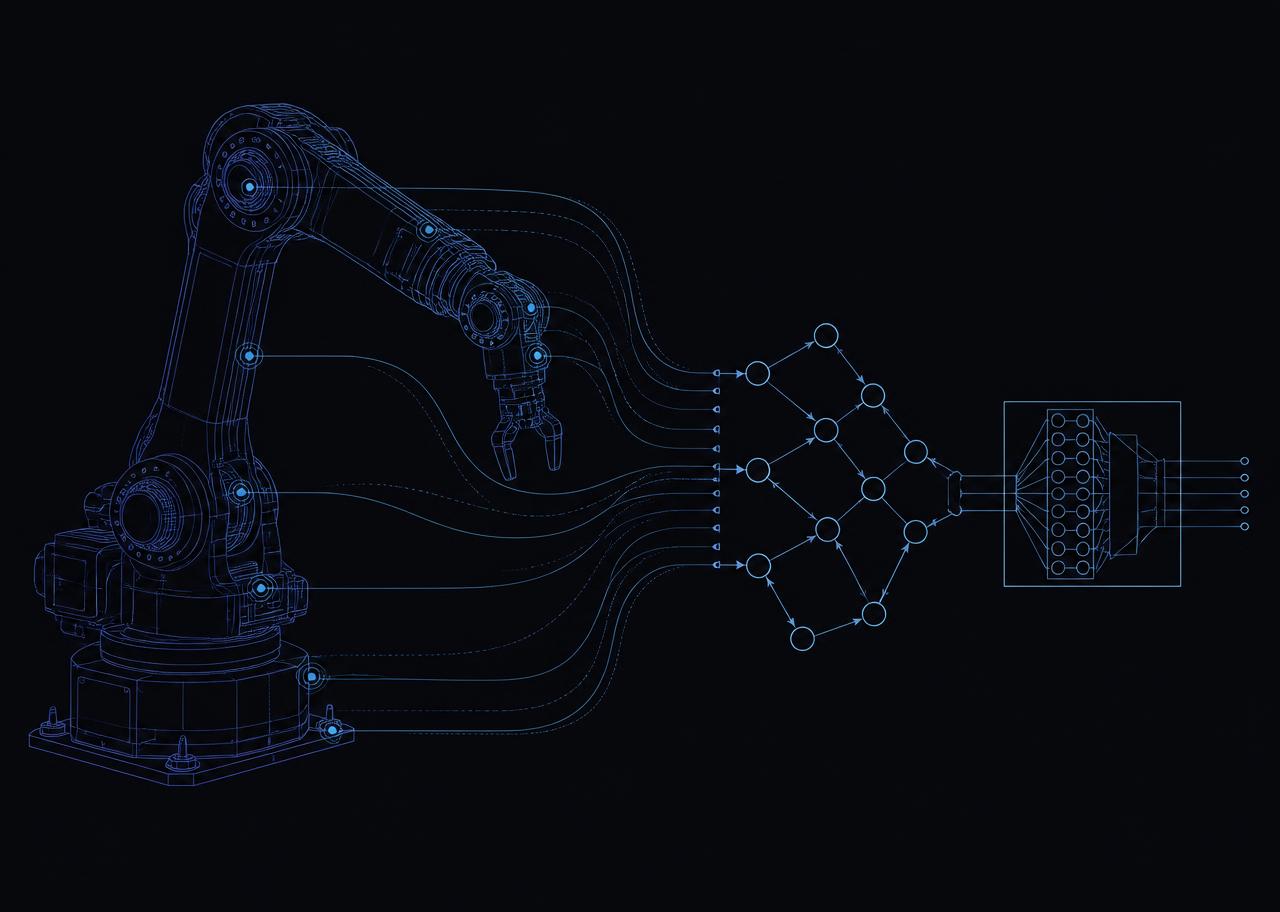
Causal AI + Robotics + Autonomous Systems
Beyond code
I’ve played violin and participated in orchestra since elementary school, and have kept performing through high school.
Music taught me that complicated systems are built from relationships. A single note matters, but what makes music work is how every note interacts with everything around it. I see engineering in much the same way.

Elementary School
Started violin and orchestra
Middle / High School
Continued orchestra and earned repeated MSBOA First Division ratings
AI Internship — Summer 1
First exposure to professional AI development
AI Internship — Summer 2
Expanded work across AI projects
MasalaMetrics
Built and launched an AI food analyzer
10,000+ Downloads
Reached thousands of real users
Seed Funding
Received funding from four investors
AI Internship — Summer 3
Continued applied AI development
Causal AI Research
Investigated causal inference applied to Type 1 Diabetes risk factors
Research Publication
Published “Beyond Correlation: A Python-Based Causal Inference Framework for Analyzing Type 1 Diabetes Risk Factors”
Patent Pending
Advanced Decision-Making Engine for Autonomous System Optimization and Dynamic Problem Solving
Next
Causal AI + Robotics
Traditional analytics can answer this.
Predictive AI can help answer this.
This is where causal reasoning becomes powerful.
Prediction tells us what might happen next. Causal reasoning may help us understand what to change.
AI-powered food analyzer app taken from concept to a shipped product with 10,000+ App Store downloads and seed funding from four investors.
A Python-based causal inference framework exploring whether risk factors associated with Type 1 Diabetes may contribute to it, beyond correlation alone.
Patent-pending work on a decision engine for autonomous system optimization and dynamic problem solving. Described at a high level only.
Three summers of applied work spanning machine learning, computer vision, generative AI, and AI application development.
Areas I’ve worked in or am actively exploring — listed as scope, not as claimed mastery.
I’m always interested in research, engineering, robotics, and conversations about what intelligent systems could become.
NEEL KARIAT · BUILDING AI THAT UNDERSTANDS WHY